



When it comes to selecting the right magnetic grid for your specific application, there are numerous factors to take into account. As a trusted magnetic grids supplier, we understand the importance of making an informed decision. This guide will walk you through the essential considerations to ensure you choose the most suitable magnetic grid for your needs.
Understanding Magnetic Flux Density
One of the primary factors in choosing a magnetic grid is the magnetic flux density, typically measured in Gauss (GS). Higher magnetic flux densities mean stronger magnetic fields, which can attract and hold magnetic particles more effectively. For applications where fine magnetic particles need to be removed from a product stream, a higher GS value is usually required.
We offer 10000 GS Magnetic Grids and 12000 GS Magnetic Grids. The 10000 GS magnetic grids provide a strong magnetic force suitable for most general - purpose applications. They can efficiently capture medium - sized to large magnetic particles in various industries such as food processing, pharmaceuticals, and chemical manufacturing. The 12000 GS magnetic grids, on the other hand, are designed for more demanding applications. They are ideal for industries where the removal of extremely fine magnetic contaminants is crucial, like in the automotive and electronics sectors.
Physical Dimensions
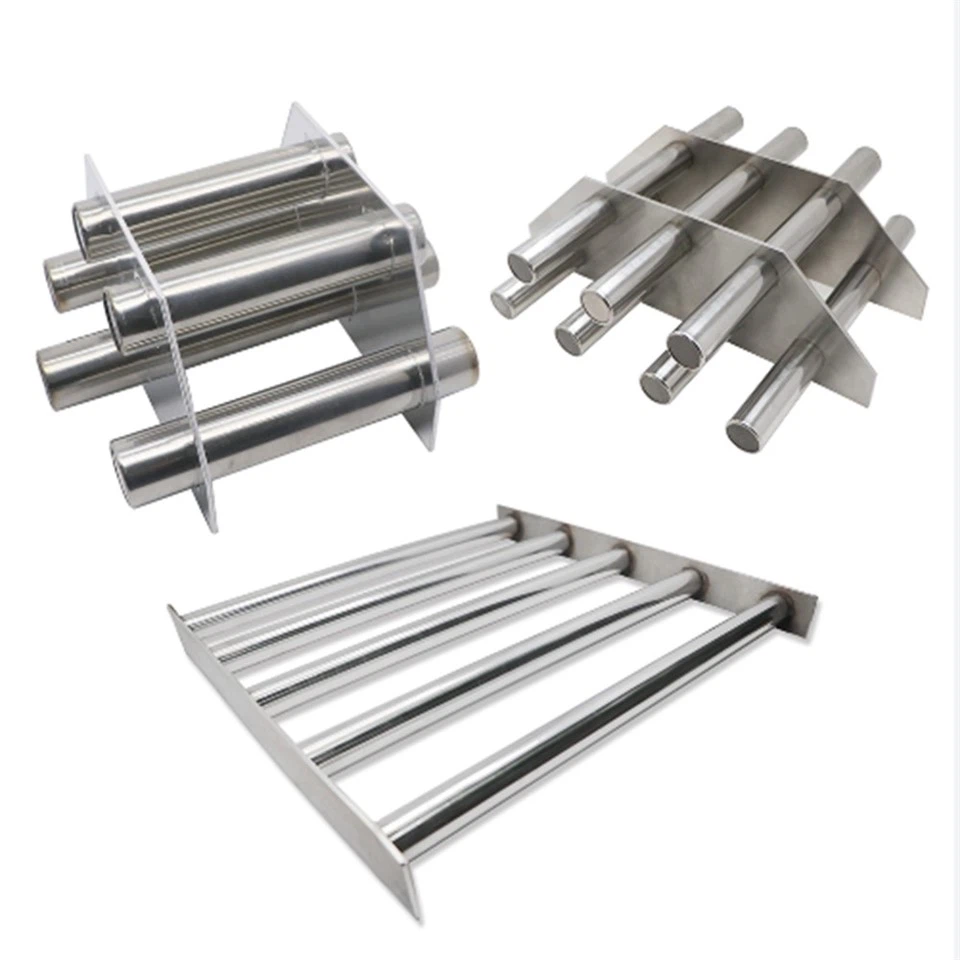
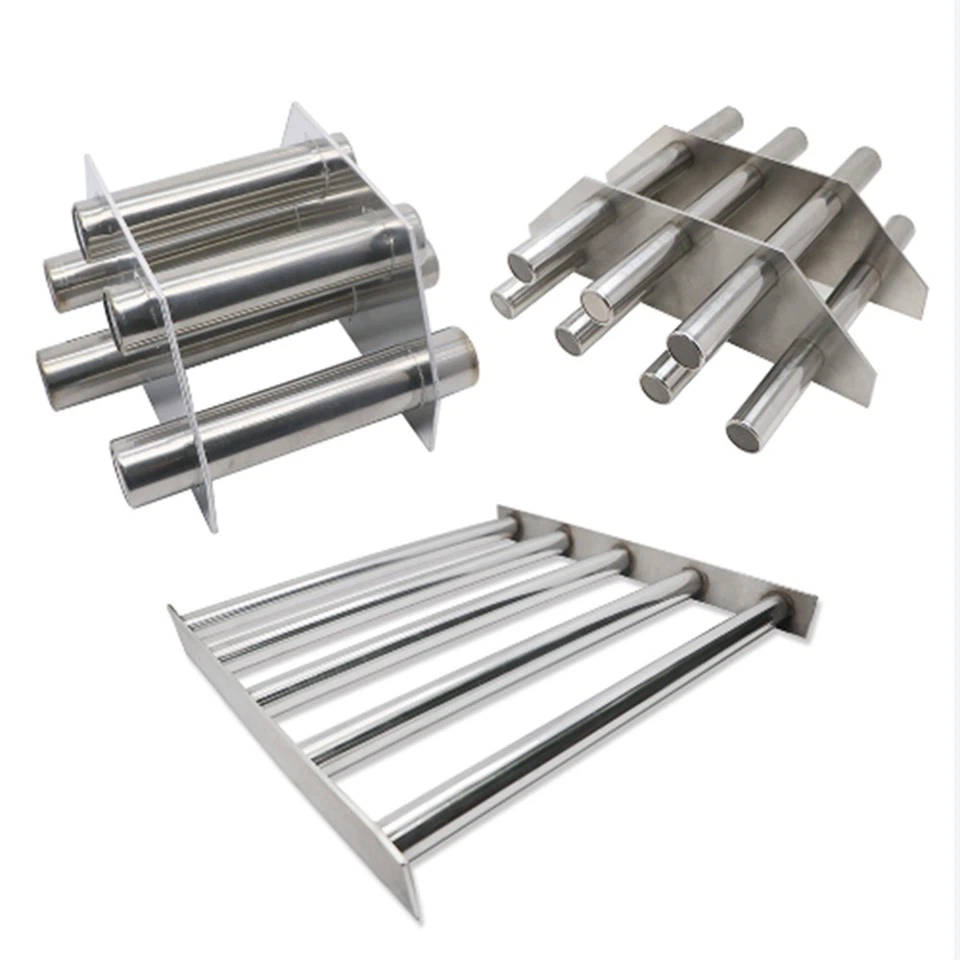
The physical dimensions of the magnetic grid are also vital. You need to ensure that the grid fits properly into the equipment or system where it will be installed. Consider the length, width, height, and the spacing between the magnetic tubes. If the grid is too large, it may not fit the available space; if it is too small, it may not be able to effectively cover the product stream, leading to incomplete particle removal.
For example, if you are using a magnetic grid in a conveyor belt system, the width of the grid should match or slightly exceed the width of the belt to ensure that all the material passing through is exposed to the magnetic field. Similarly, in a hopper or chute application, the height and length of the grid need to be sufficient to intersect the material flow path.
Material Compatibility
The materials in your application can have a significant impact on the performance and longevity of the magnetic grid. Different industries deal with various types of products, and the magnetic grid must be compatible with these materials.
In the food industry, for instance, the magnetic grid should be made of food - grade materials that are non - toxic and easy to clean. Stainless steel is a popular choice as it is corrosion - resistant and can withstand frequent cleaning and sanitization processes. In chemical applications, the grid needs to be resistant to the chemicals present in the product stream. Specialized coatings or materials may be required to prevent the grid from deteriorating due to chemical reactions.
Grid Configuration
There are different configurations of magnetic grids available, and the choice depends on the application. The most common configurations include single - layer and multi - layer grids.
Single - layer grids are simple and cost - effective. They are suitable for applications where the magnetic particle load is relatively low and the product flow is not very complex. Multi - layer grids, on the other hand, provide a higher level of particle capture efficiency. They are designed to expose the product to multiple layers of magnetic fields, increasing the chances of magnetic particles being attracted and retained. This makes them ideal for applications with high - volume product flows or where the presence of fine magnetic particles is a concern.
Temperature Resistance
The operating temperature of your application is another critical factor. Magnetic grids have a maximum operating temperature beyond which their magnetic properties can degrade. If the temperature in your application exceeds this limit, the magnetic force of the grid will weaken, and it will become less effective at capturing magnetic particles.
For high - temperature applications such as in the metalworking or glass manufacturing industries, you need to choose a magnetic grid that is specifically designed to withstand elevated temperatures. These grids are often made with special magnets and materials that can maintain their magnetic properties even at high temperatures.
Cleaning and Maintenance
Ease of cleaning and maintenance is an important consideration, especially in industries where hygiene is a top priority. A magnetic grid that is difficult to clean can lead to the accumulation of captured particles, which can reduce its efficiency over time.
Some magnetic grids are designed with features that make cleaning easier. For example, grids with quick - release mechanisms allow for easy removal of the magnetic tubes for cleaning. Additionally, smooth - surfaced grids are less likely to trap particles, making them easier to clean. Regular maintenance, such as checking for any damage to the grid or magnets, is also essential to ensure its long - term performance.
Cost - Effectiveness
While it is important to choose a high - quality magnetic grid, cost - effectiveness is also a significant factor. You should consider the initial purchase price of the grid as well as its long - term operating costs. A more expensive grid may offer better performance and durability, which can result in lower replacement and maintenance costs over time.
However, you also need to balance the cost with the specific requirements of your application. For some applications, a less expensive grid may be sufficient, while for others, investing in a high - end grid is necessary to meet the quality and safety standards.
Application - Specific Considerations
Different industries have unique requirements when it comes to magnetic grids. Here are some examples:
Food Industry
In the food industry, the magnetic grid must meet strict hygiene standards. It should be easy to clean and sanitize to prevent any contamination of the food products. The grid should also be able to capture small magnetic particles that may be present in raw materials such as grains, spices, and meat.
Pharmaceutical Industry
Pharmaceutical applications require the highest level of purity. The magnetic grid needs to be made of high - quality materials that will not shed any particles into the pharmaceutical products. It should be able to remove even the tiniest magnetic contaminants to ensure the safety and efficacy of the drugs.
Mining Industry
In the mining industry, magnetic grids are used to remove magnetic impurities from ores. They need to be able to handle large volumes of material and have a high magnetic force to capture the magnetic particles effectively. The grids also need to be durable enough to withstand the harsh operating conditions in mines.
Recycling Industry
The recycling industry deals with a wide variety of materials. Magnetic grids are used to separate magnetic materials from non - magnetic ones. They need to be able to adapt to different types of waste streams and have a high capture efficiency to maximize the recovery of valuable magnetic materials.
Conclusion
Choosing the right magnetic grid for your application requires a comprehensive understanding of your specific requirements. By considering factors such as magnetic flux density, physical dimensions, material compatibility, grid configuration, temperature resistance, cleaning and maintenance, and cost - effectiveness, you can make an informed decision.
As a leading magnetic grids supplier, we have a wide range of Grid Magnet options to meet your diverse needs. If you are unsure which magnetic grid is the best fit for your application, our team of experts is ready to assist you. We can provide detailed information and guidance based on your specific circumstances.
If you are interested in learning more about our magnetic grids or are looking to start a procurement process, please feel free to reach out to us. We look forward to discussing your requirements and helping you find the perfect magnetic grid solution.
References
- Magnetic Separation Handbook, ed. by C. D. Meloy, Butterworth - Heinemann, 1997.
- Industrial Magnetics: Theory and Application, by R. L. Davis, CRC Press, 2001.